
From digital scans to a finished denture
Digital dentistry is changing the way we approach full-mouth dentures. What was once a largely manual process, involving physical impressions, stone models, wax setups and acrylic processing, can now be managed through a digital workflow that offers greater control, consistency and efficiency.
By combining digital scans, Exocad design software and 3D printing with dedicated denture materials such as SprintRay Denture Base Resin and OnX Tough 2, we can simplify many stages of denture production while maintaining a strong focus on fit, function and aesthetics.
For dentists and dental laboratories, the main advantage is not simply that the denture is printed. It is that much of the process can be planned, reviewed and refined digitally before the final prosthesis is manufactured.
1. Starting with digital scans instead of conventional impressions
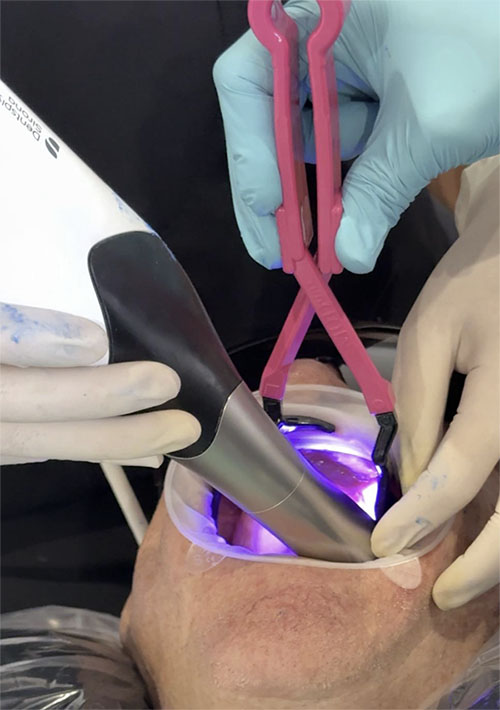
With a digital workflow, intraoral scans can capture the available anatomical information and transfer it directly to the laboratory. Existing dentures and other clinical records can also provide useful information when planning the new prosthesis.
The digital approach reduces the need for physical impression materials, model pouring and the transport of bulky casts. It also allows the laboratory to receive the records electronically, making communication and case management more efficient.
Digital files can be reviewed, stored and shared without the risk of physical models being damaged during transport. If adjustments to the design are needed, the laboratory can work directly from the digital data rather than starting again with a new physical model.
However, complete dentures present a particular challenge: the tissues supporting them are mobile, and the borders and peripheral seal are important to retention and stability. Intraoral scans do not automatically replace every function of a conventional impression, especially in cases with highly mobile tissues or challenging anatomy. A carefully planned scanning protocol, appropriate functional records and clinical judgement remain essential.
2. Designing the denture in exocad
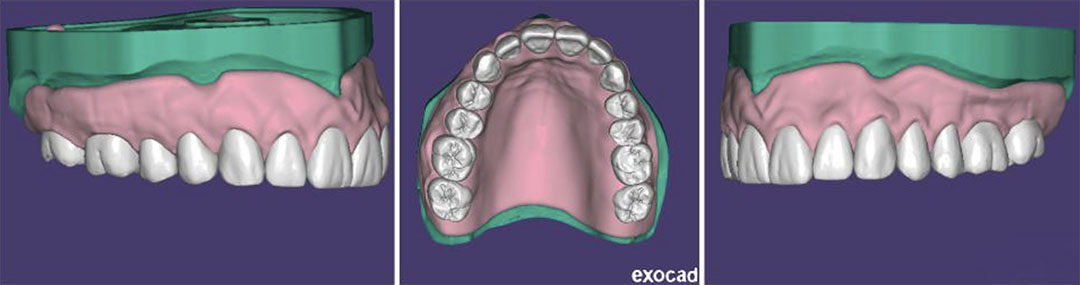
Once the digital records have been received, exocad allows the laboratory to plan the denture in a virtual environment before manufacturing begins.
The technician can assess the available space, arrange the teeth, develop the gingival contours and review the overall shape of the prosthesis. The digital setup can also be evaluated in relation to the patient’s existing dentition, facial photographs, bite records and aesthetic requirements, where these records are available.
One of the biggest advantages of digital design is the ability to make changes before printing. Tooth positions, contours and other design details can be reviewed on screen, making communication between the dentist and laboratory more straightforward.
Once the design has been approved, the digital file can be used to manufacture the denture. The approved design can also be retained for future reference, allowing the laboratory to reproduce or modify the prosthesis without recreating the entire setup from scratch.
This creates a more controlled workflow. Rather than relying entirely on a sequence of manual adjustments, the technician can plan many details in advance and make changes in a repeatable digital environment.
3. SprintRay Denture Base Resin: Creating the base
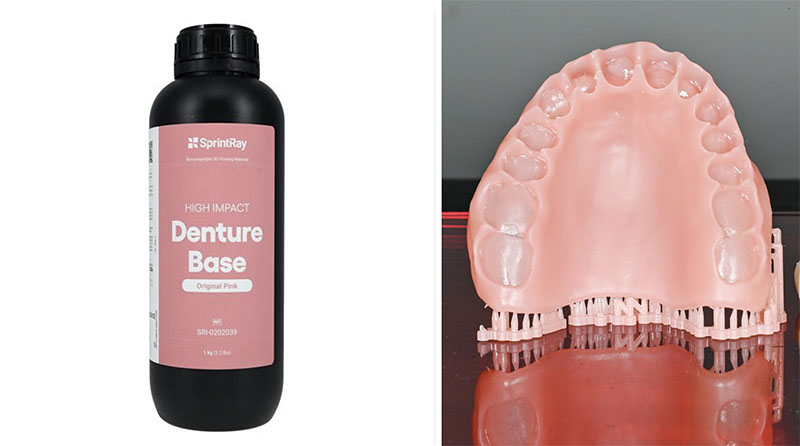
The denture base is a critical part of the final prosthesis. It must provide appropriate support, reproduce the intended tissue surface and contribute to the overall fit, retention and comfort of the denture.
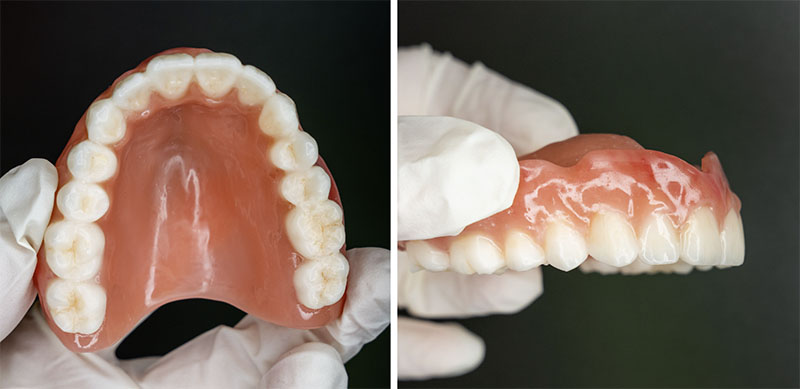
SprintRay Denture Base Resin is a light-curable material developed for the digital manufacture of removable denture bases. Instead of processing the base through a traditional flasking and heat-polymerisation workflow, the laboratory can use a compatible 3D printer to produce the base directly from the approved digital design.
This offers several practical advantages.
Consistency and repeatability: The base is manufactured from a defined digital file using a controlled printing and post-processing workflow. This helps reduce variation associated with some manual fabrication stages.
Digital storage: The original design can be saved for future reference, making it easier to reproduce a base or introduce planned modifications when required.
Efficient production: Printing can reduce the number of conventional laboratory stages involved in producing the base. There is no need to complete every traditional step of investing, flasking and heat-processing the denture base.
A more integrated workflow: Because the base is designed digitally, its relationship with the tooth arrangement can be planned before manufacturing, helping the laboratory coordinate the different components of the denture.
As with any printed dental material, the final properties depend on using the correct printer settings, washing, post-curing, finishing and polishing procedures specified by the manufacturer. A printed base still requires careful quality control and clinical verification.
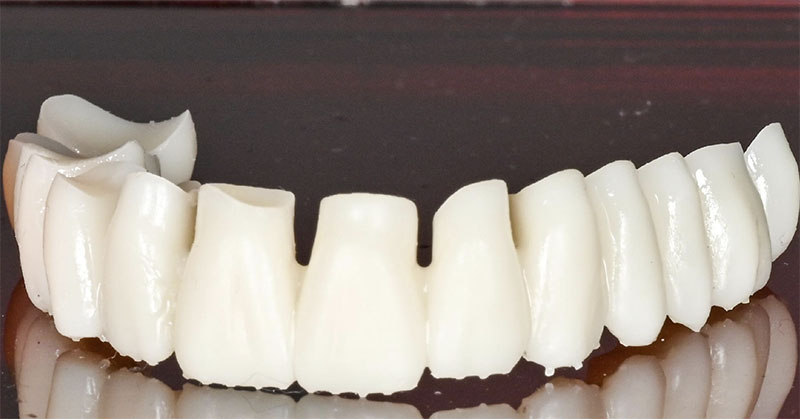
4. OnX Tough 2: Bringing the teeth to life
The teeth are just as important as the base. Their appearance, shape, position and durability all contribute to the final result.
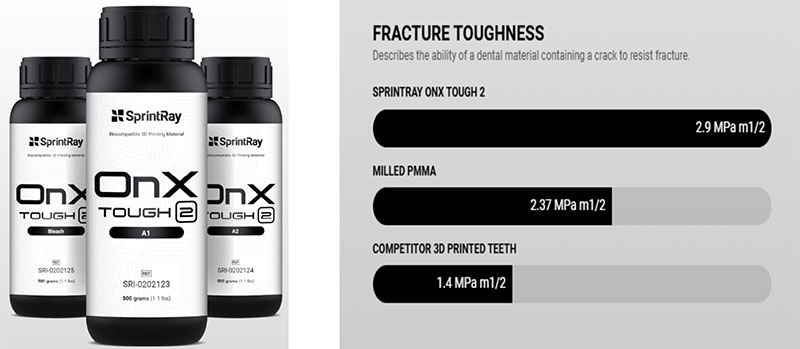
SprintRay OnX Tough 2 is a ceramic-hybrid dental printing resin designed to provide tooth-like optical properties alongside mechanical performance. Its formulation uses NanoFusion technology, and the manufacturer highlights its fracture resistance, aesthetics and shade stability.
Within a digital denture workflow, a tooth-shade printing material can help the laboratory achieve a coordinated result with greater control over the planned tooth arrangement. The digital setup determines the position and shape of the teeth, while the material and finishing process contribute to the final appearance.
The aim is to achieve a natural-looking smile with appropriate tooth proportions, shade and alignment, while maintaining the functional requirements of the prosthesis.
Material selection is important. OnX Tough 2 has specific indications, and the exact application, printer compatibility and availability must be confirmed against the current instructions for use in the relevant market. Where the workflow involves separately printed teeth and a denture base, the laboratory must also follow the prescribed bonding and post-processing protocol.
5. Why choose a digital workflow over conventional acrylic dentures?
Conventional acrylic dentures remain a valuable and widely used treatment option. They have a long clinical history, and experienced technicians can achieve excellent results using traditional methods.
The difference with a digital workflow is the level of control, documentation and repeatability it can offer.
A digital process can reduce or reorganise several steps. Once the records are suitable and the design is approved, the laboratory can move directly into digital manufacture, reducing some of the handling and manual work associated with conventional processing.
More predictable manufacturing
Traditional acrylic processing can introduce variables related to packing, polymerisation, finishing and technician handling. Digital manufacturing standardises more of the production process through software, printer parameters and defined post-processing protocols.
This does not mean that every printed denture will automatically fit better than a conventional one. Rather, it provides a more repeatable manufacturing process, with the opportunity to trace the result back to the original design.
Easier reproduction and future modifications
One of the most useful long-term advantages is having the design stored digitally. If a denture needs to be reproduced, or a similar design is required in the future, the laboratory can access the existing files as a starting point.
The file may still need to be updated to reflect changes in the patient’s anatomy, bite or treatment requirements, but it provides a valuable reference that conventional workflows do not always offer in the same form.
6. A more efficient turnaround time
In a conventional workflow, time is required for impression handling, model production, laboratory setup, wax processing, acrylic polymerisation and finishing. Additional appointments or remakes may extend the overall treatment timeline.
A digital workflow can shorten the laboratory production process by removing or reducing several of these stages. Digital records can be transferred immediately, design work can begin without waiting for physical models, and manufacturing can start once the case has been checked and approved.
The workflow can also become easier to organise. Because the design and production files are stored digitally, cases can be managed with a clearer record of their progress, and approved designs can be retrieved when needed.
The actual turnaround depends on the complexity of the case, the quality of the records, the need for a try-in, design approval, printer capacity, post-processing and any clinical adjustments required. Printing is only one part of the process, so it is important to distinguish manufacturing time from the total time needed to deliver a clinically satisfactory denture.
For our laboratory, the objective is to make the process as efficient and predictable as possible while maintaining the checks required for a successful outcome.
7. Does digital mean fewer appointments?
It can, but the answer depends on the patient and the clinical situation.
For suitable cases with good digital records, an established workflow and a clear treatment plan, digital dentures can reduce the number of laboratory stages and may help simplify the appointment sequence.
Nevertheless, a try-in or other verification stage may still be appropriate, particularly when tooth position, aesthetics, vertical dimension, jaw relationships or patient expectations need to be confirmed. Difficult anatomy, unstable ridges and discrepancies in the clinical records may also require additional steps.
The goal is not to eliminate appointments at all costs. It is to make each stage purposeful, reduce avoidable repetition and give the dentist greater confidence in the planned result.
Digital dentistry does not replace clinical judgement or skilled dental technicians. It gives them better tools to plan, communicate and manufacture. When the records, design, materials and clinical verification are managed properly, digital dentures can become a valuable part of modern complete denture treatment.


