
DEFINITIVE 3D PRINTING: THE IMPACT OF CERAMIC FILLED RESINS IN THE DIGITAL WORKFLOW
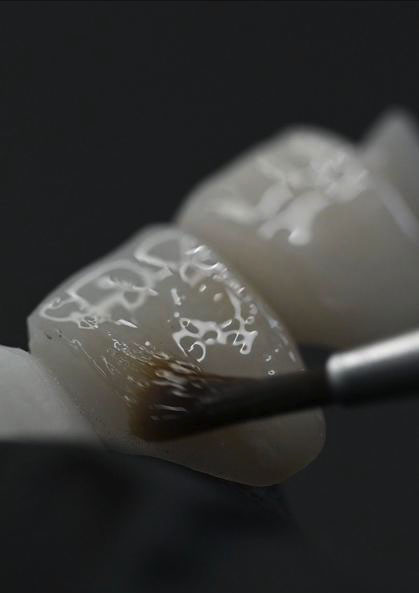
In today’s restorative dentistry, the search for materials that combine the rigidity of traditional ceramics with the biomechanical flexibility of composite resins has found its answer in Ceramic Filled Resins.
With the evolution of digital equipment in our laboratory—led by next-generation ecosystems like SprintRay (Pro 2 and the innovative Midas technology)—we can now deliver definitive 3D-printed restorations with exceptional precision and biomechanics.
What Makes Ceramic Filled Resins Unique?
Unlike conventional light-cure resins, these hybrid materials feature a ceramic/zirconia filler load exceeding 50–75% by weight. This translates into key clinical benefits for restoration performance:
- Dentine-like elastic modulus: They distribute occlusal forces evenly, reducing stress on the remaining tooth structure and mitigating the risk of catastrophic fractures.
- Wear resistance and hardness: They offer long-term occlusal stability and polish retention comparable to milled hybrid ceramics or direct nano-filled composites.
- Marginal seal and fit: Printed layer-by-layer using photopolymerization at resolutions down to 45 μm, they eliminate the micro-mechanical wear associated with milling burs, achieving an extremely passive cervical fit.
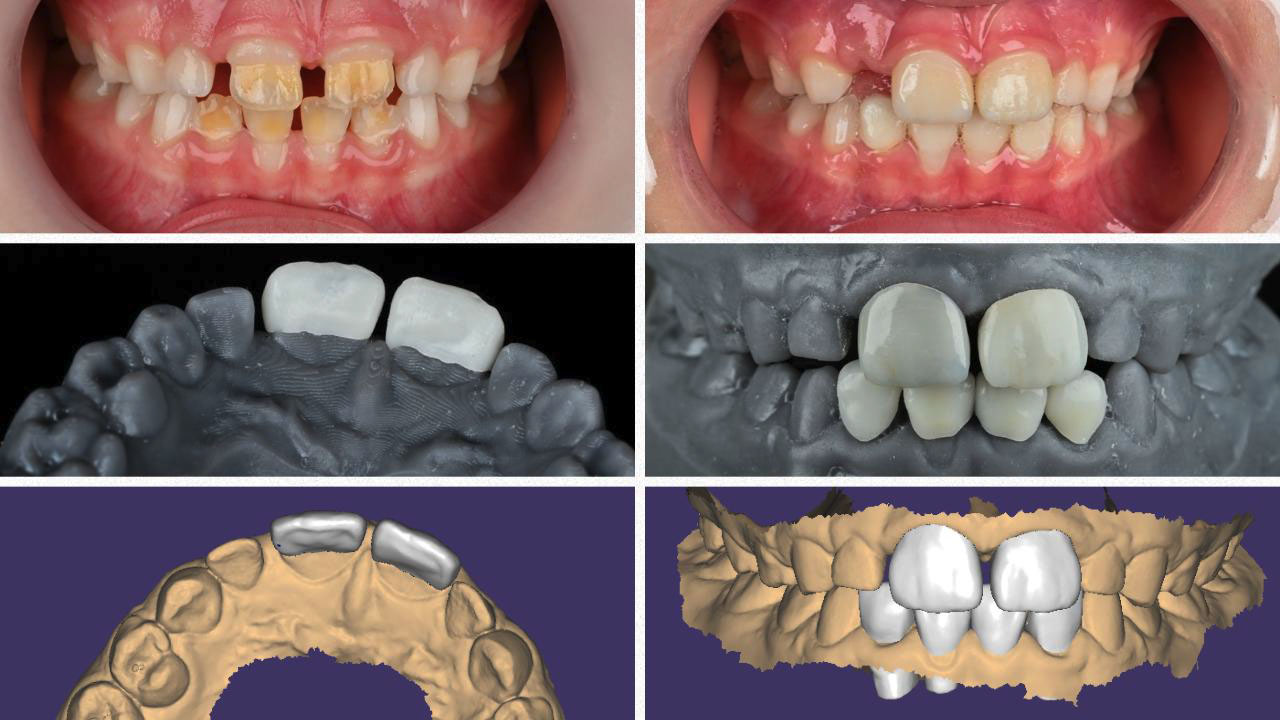
Conservative Management in Pediatric and Young Adult Patients
In adolescent and young adult patients, fixed prosthodontic therapy presents unique physiological challenges:
- Large Pulp Chambers & Immature Dentin: Aggressive tooth preparation required for traditional full-coverage crowns (e.g., monolithic zirconia or porcelain-fused-to-metal) carries a high risk of pulpal exposure, thermal trauma, or irreversible pulpitis.
- Continuous Eruption and Periodontal Maturation: The gingival margin and alveolar housing undergo ongoing physiological remodeling, making invasive margin placement undesirable.
- Accidental Trauma & High Occlusal Stress: Young patients often exhibit higher rates of traumatic dental injuries or nocturnal bruxism, requiring materials with high strain tolerance.
Why Ceramic-Filled Resins are the Ideal Conservative Solution:
- Ultra-Conservative Preparation Guidelines: Due to the high tensile strength and adhesive bond capability of 3D-printed ceramic-filled resins, full-coverage restorations require significantly less reduction (1.0 to 1.2 mm occlusal, 0.6 to 1.0 mm axial/axial chamfer). This preserves maximum natural enamel and dentin.
- Physiological Shock Absorption: Unlike monolithic zirconia—which acts as a rigid wedge under heavy impact—the dentin-like elastic modulus (7 to 15 GPa) of ceramic-filled resin restores natural tooth biomechanics. It acts as a shock absorber during occlusal overload, protecting both the remaining tooth structure and the developing periodontium.
- Reversibility and Future Restorative Options: Should the restoration need replacement later in life due to gingival recession or growth changes, the underlying tooth architecture remains intact and undamaged, keeping all future restorative pathways open.
Technological Innovation
Processing resins with such high viscosity and ceramic filler content was once a challenge for standard 3D printers.
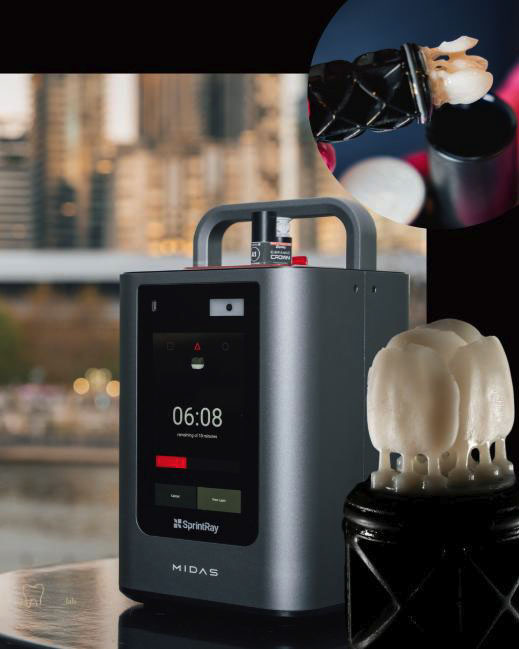
SprintRay Midas (DPS – Digital Press Stereolithography): This platform utilises sealed single-dose capsules that inject dense material directly into the polymerization zone. This eliminates process variability, ensuring maximum cross-linking density and ideal ceramic particle dispersion.
Clinical Guide: Seating and Cementation Protocol
To ensure long-term success for Ceramic Filled Resin restorations, we recommend following a standard adhesive protocol:
| Stage | Recommended Procedure |
|---|---|
| Restoration Surface Prep | Air-abrasion (Intaglio) using aluminum oxide Al2O3 (27-50µm). Apply silane / universal primer. |
| Tooth Surface Prep | Selective or total-etch according to your preferred adhesive system. |
| Cementation | Strictly use resin cements (light-cure or dual-cure). Chemical adhesion is essential to reinforce the tooth-restoration complex. |
| Occlusal Adjustments & Polishing | Adjust with fine-grit diamond burs and perform quick polishing using composite rubber points and diamond pastes. |
Direct Benefits for Your Practice
- Same-day restorations: Drastically reduced turnaround times without sacrificing aesthetics or strength.
- Natural, translucent aesthetics: Available in standard VITA shades (A1, A2, A3, B1, Bleach) with a translucency profile like lithium disilicate.
- Biocompatibility and versatility: Indicated for definitive crowns, inlays, onlays, and veneers.
INDICATIONS AND CLINICAL OUTLOOK
Ceramic-filled photopolymer resins processed via advanced 3D printing technologies provide a scientifically sound, conservative alternative for:
- Single definitive full-coverage crowns
- Partial coverage restorations (Inlays, Onlays, Overlays)
- Veneers and wear-rehabilitation overlays
By leveraging additive workflows with platforms like SprintRay Midas and Pro 2, our laboratory can deliver restorations that closely mimic the flexural dynamics of natural dentition with high marginal precision.


